How we work
From the first meeting to a clear picture and tools you can test.
Who it is for
For company owners and managers
The full cycle needs a team that can be surveyed anonymously.
If you work on your own, you can order a map of your client's path, a process diagram or a tool separately.
You will recognise the situation if…
- Clients complain about deadlines, but you can't see where exactly the time goes.
- Your company is growing or opening a new line of business, but the same mistakes and rework keep coming back.
- You can't see how the work actually runs: only the people doing it know what happens between a request and the result, and each does it their own way.
- You run a firm where everything goes through you, and weekends turn into working days.
- You lead a startup before a funding round or a hiring wave, and an investor asks to see how your operations work.
- You work on your own for several clients, and everything lives in your head, so some commitments slip through the cracks.
What we do
We analyse how work really runs and build tools for your process
Where work breaks down most often
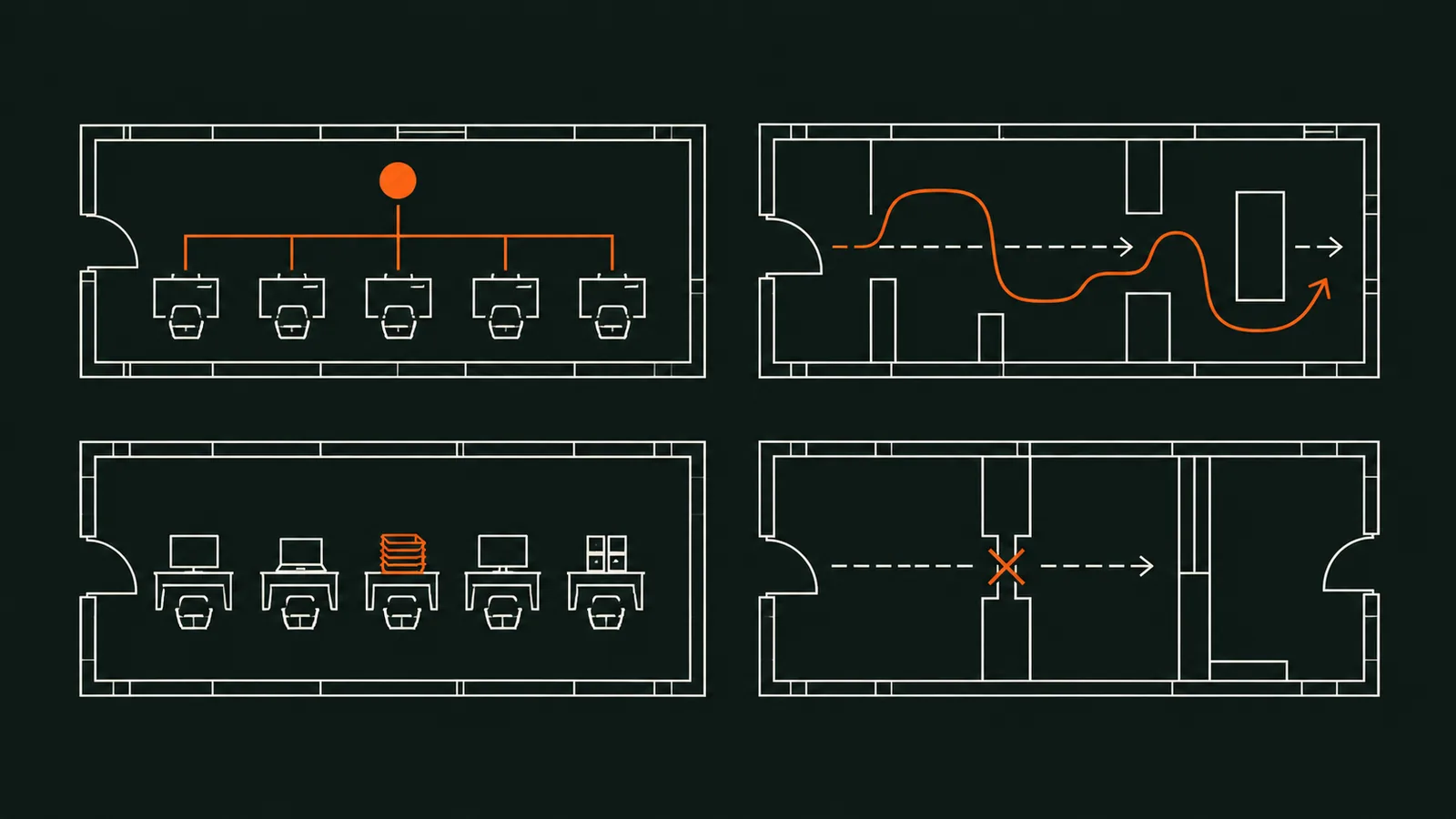
The process rests on a few key people, not on a system.Signs: the business isn't growing, yet day-to-day work takes more and more people; new employees take a long time to find their feet.
What we do: we describe the process so the work can be handed over.
The instructions exist, but nobody follows them.Signs: nobody updates them, nobody uses them, and the work runs differently from how it is described.
What we do: we find where the rules and the work part ways, and why.
There is no standard for using tools, AI included.Signs: everyone uses their software their own way; a client asks what happens to their data when you use AI.
What we do: we describe shared rules for working with tools and the tasks AI can take on, with checks.
Work stalls at the handovers between teams.Signs: each team works towards its own result, the stages are not aligned, and work stalls even though everyone is busy.
What we do: we look at the whole path of the work across all teams and find where and why it gets blocked.
What you can order
The full cycle: research and a document. Separately: a map of your client's path, a diagram of one process, or a tool for your work.
How
First we study how the work runs. Then we formulate hypotheses that can be tested.
We look at the same work three times: from outside, as a customer; from inside, as each of your employees; and from outside again, at the whole process, as an analyst.
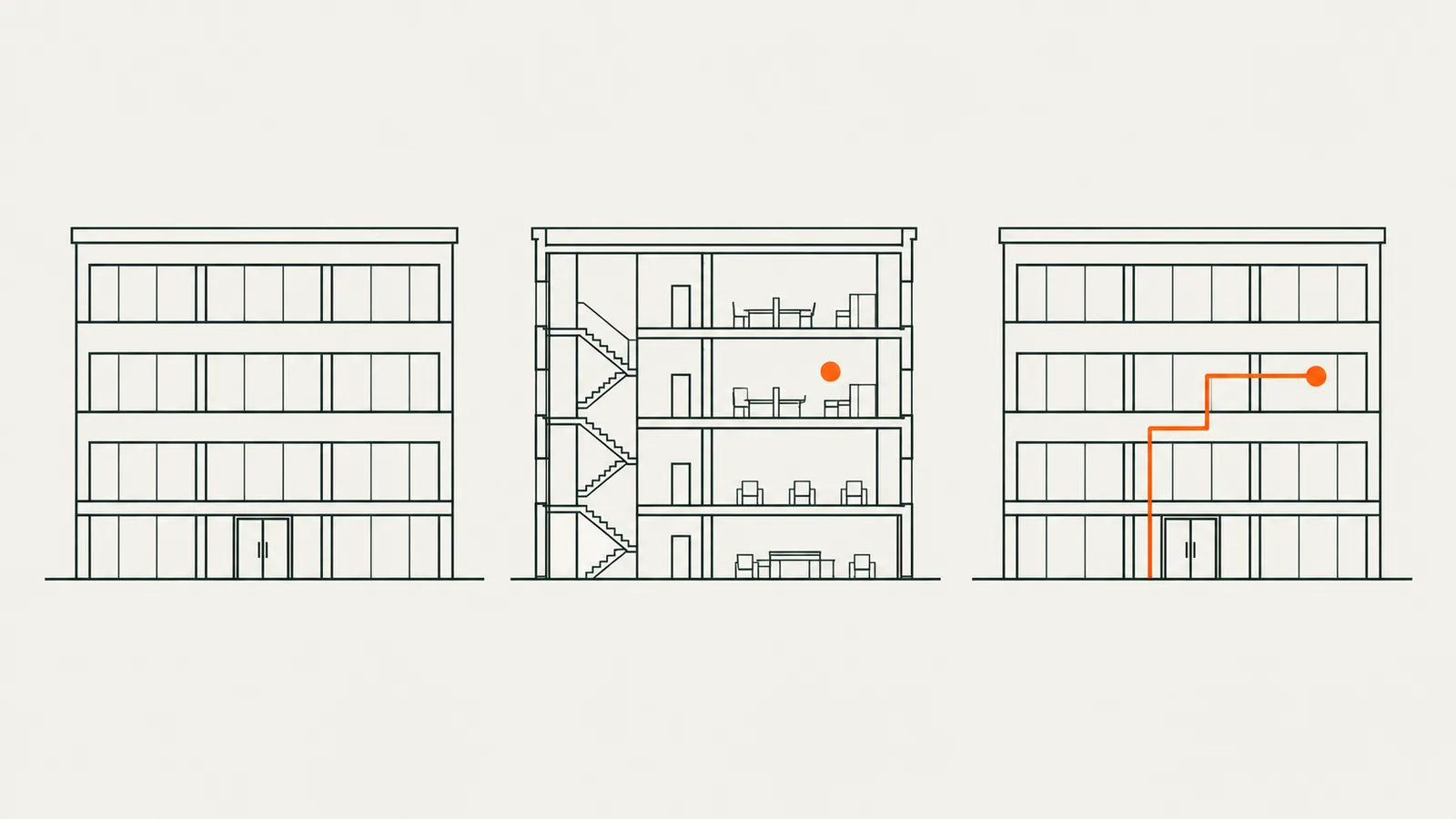
Five steps to findings
- 01First conversationThrough the form on the site or directly, whichever suits you.
- 02Video meetingFree, with no obligation. You tell us what isn't working.
- 03Agreeing termsWhat you need: the full cycle, a separate element or a tool. Price, scope and timing: before you pay anything. Work starts once the agreement is signed.
- 04ResearchA 60–90 minute kick-off meeting for the research, an anonymous team survey (you see the questionnaire in advance), interviews with the people who run the process, and a walk-through of the process with department representatives.
- 05Findings and hypothesesWe put what we find into one document and hand it to you.
Five steps are your path with us. The six ORIENT steps are how we think inside every project.
What stands behind this: ORIENT, one cycle of six steps
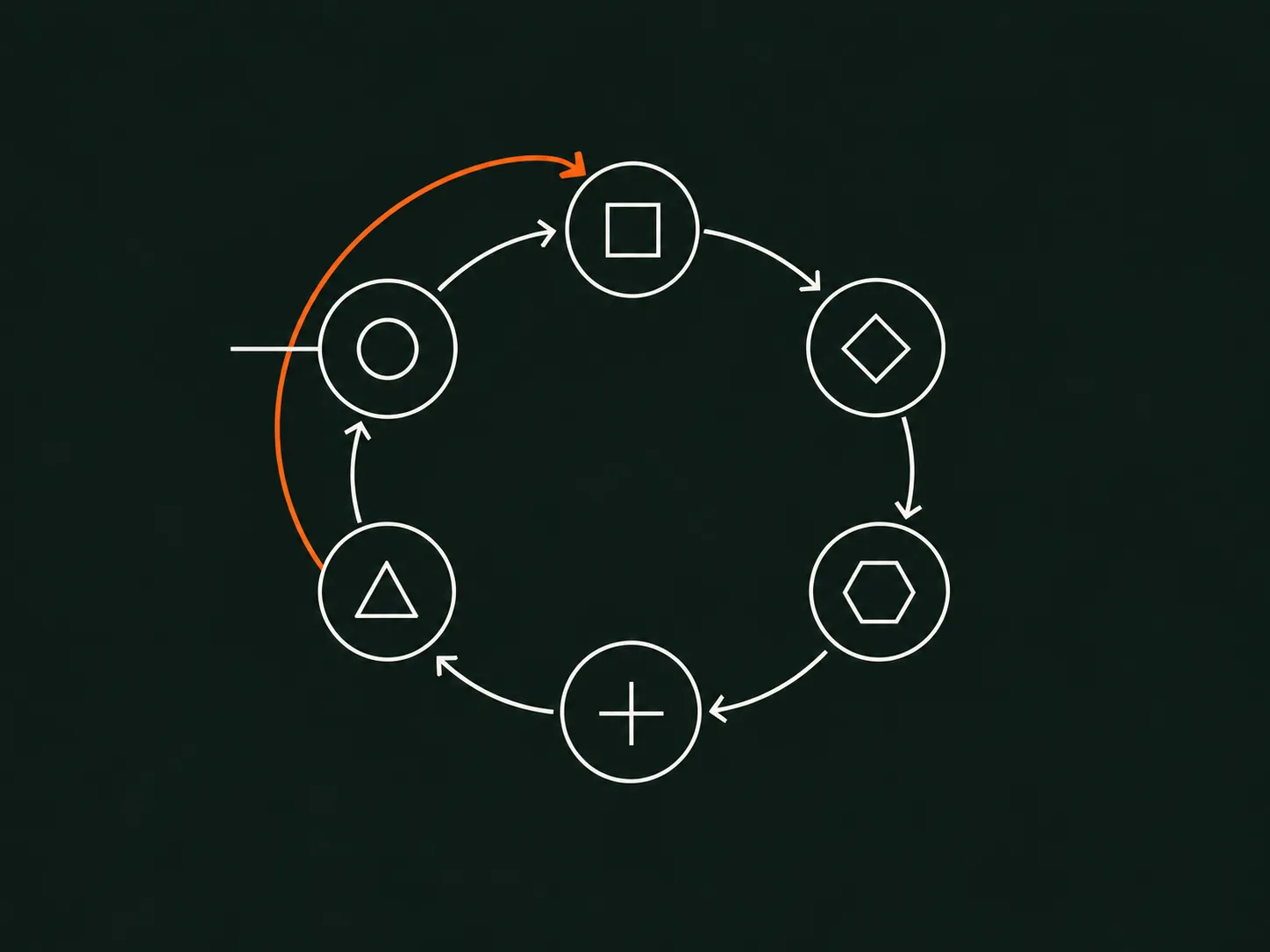
ORIENT is our method. The six steps work only together, as one cycle.
- 01
Gather information for analysis Offload
Goal: first gather everything about the work, from outside and inside, without judgement.
- 02
See it as it is Read reality
Goal: describe how the work actually runs, not how it looks on paper; every statement with a source.
- 03
Understand what's really needed Identify what you want
Goal: find the real need behind the request and what matters now, given your resources.
- 04
Name the obstacles Examine obstacles
Goal: separate what really blocks the goal from opinion or fear, and order the obstacles by impact.
Problems the hypotheses do not cover are presented separately: a structural tension for management to decide.
- 05
Form hypotheses and build the tools Navigate steps
Goal: turn obstacles into hypotheses with a small test before a big step, and build tools where they are needed.
- 06
Act and review Track and revise
Goal: define the metrics that will show whether the change worked.
If the situation changes, the cycle returns to the second step.
ORIENT claims no authorship of the approaches it draws on: the OODA loop, GTD, design thinking, the Socratic method, Stoicism
- 01
What AI does, and what Vitali does
Drafts of the document's sections are prepared by an AI-based system that Vitali built.
Conversations with people, the choice of what goes into the document, and the conclusions are Vitali's — and so is the responsibility for them.
Staff personal data is not passed to AI services; only Vitali sees the raw notes.
What you get
The document: eight sections.
One document at the end of the cycle, with hypotheses and metrics, and working tools where they are needed.
00About this document
What it is built on: how many conversations, how many questionnaires, what two independent sources confirmed, what remains a hypothesis.
01Observations
What is visible in your work and where each remark comes from.
02Roles in the process
Who takes the request, who moves it along, who closes it.
03Customer path map
Your customer's path from first contact to result: what they do and where they run into difficulties.
04Process diagram
What stands behind the customer's path and what they never see: where the work breaks down and why.
05Promise and reality
What you promise people and what you actually give. Where the two differ, there are problem areas: with a goal, critical obstacles and risks.
06Hypotheses
Each is tied to a specific point above and comes with step-by-step instructions for testing it on your own.
07Metrics
How to tell whether anything has changed, and when to look.
Available on request: analysis from several perspectives, a snapshot of the business model, a tool for calculating gains.
Evidence marks
How to read the document
This guards against the main pitfall of reviews like this: mistaking opinion for fact. Every statement is marked.
- confirmedTwo independent sources say the same.
- reportedOne person said it; not yet cross-checked.
- hypothesisAn inference, to be tested.
- unknownThe data isn't there. The field stays empty.
See an excerpt from the document
Document · section 2 · excerptIllustrationconfirmedOrders above the monthly limit wait for a single approver. When that person is away, they wait longer.
reportedCustomers hear about delays from the courier, not from the office.
hypothesisOne shared status field would eliminate most follow-up calls.
unknownShare of orders changed after confirmation
Your data
Your data is processed under GDPR rules
Tajar is registered in Poland, so we handle your data under the GDPR, wherever you are.
A data agreement · A survey without names · Who has access · Deletion
A data agreement
The contract comes with an annex on personal data processing under Article 28 of the GDPR: who is responsible for what, and what happens to the data. You are the controller, we are the processor.
A survey without names
Small groups are merged, and no answer reaches you with a name attached. Employees will be told: the study is not about their personal performance but about the effectiveness of the company's structure.
Who has access
Only Vitali has access to raw notes and answers: encrypted disk, two-factor login, a separate folder for each project.
Deletion
Raw answers and notes are deleted after the project, within the period set in the contract.
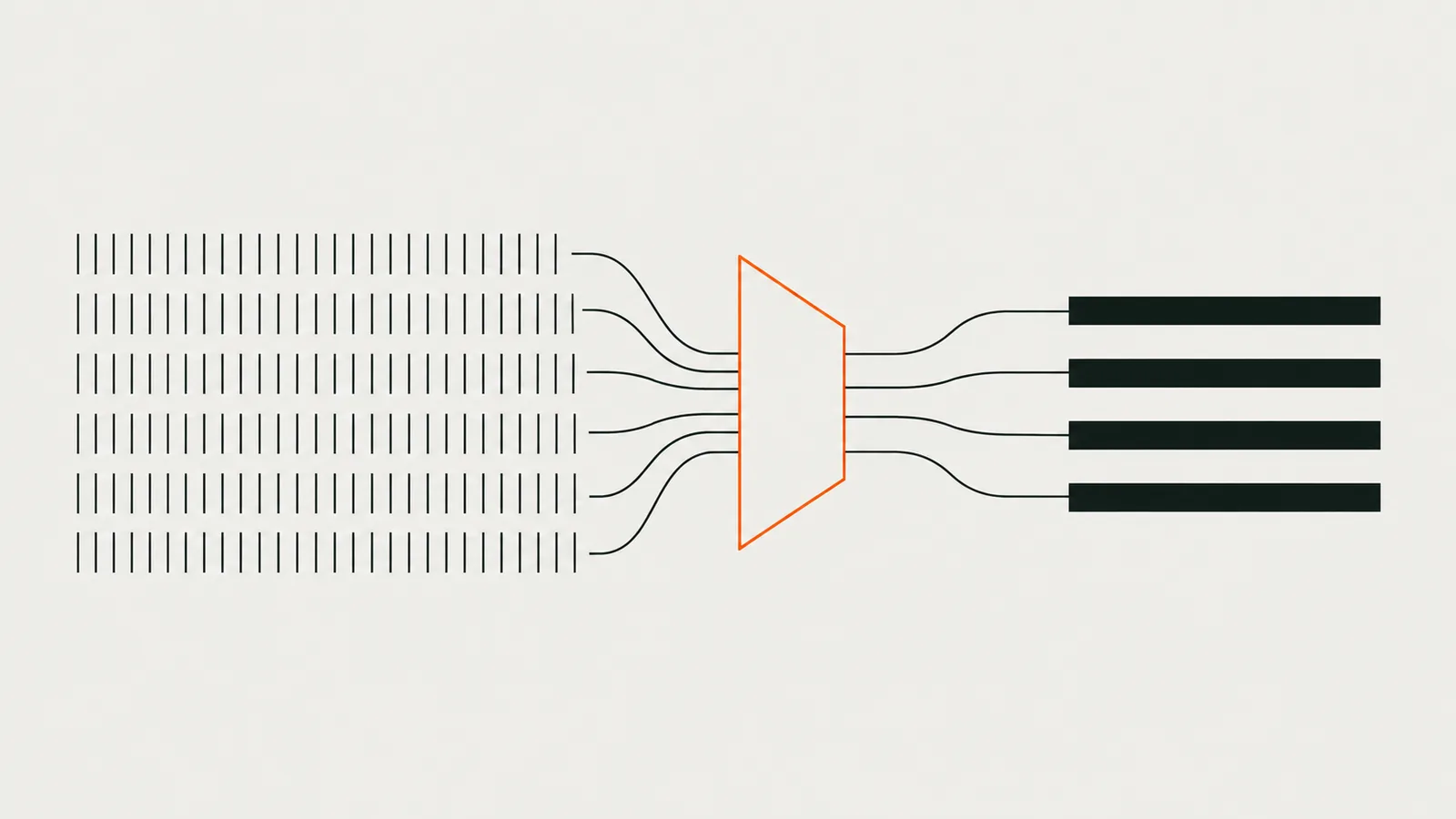
The data you leave in the form is described on the Contact page
Questions
What does it cost, and how long does it take?
The price is set per project. We name it, together with scope and timeframe, in the offer after the meeting, before the contract is signed. The timeframe depends on the size of the team and the work.
Can I order just a part?
Separately you can order a client path map, a process diagram or a tool. The ORIENT steps cannot be ordered one by one: they work only together, as one cycle.
Will I know who said what?
No. More in "Your data".
Bring us a process that isn't working.
Let's start with one meeting: video, free, no obligation.
Request contact